Introduction
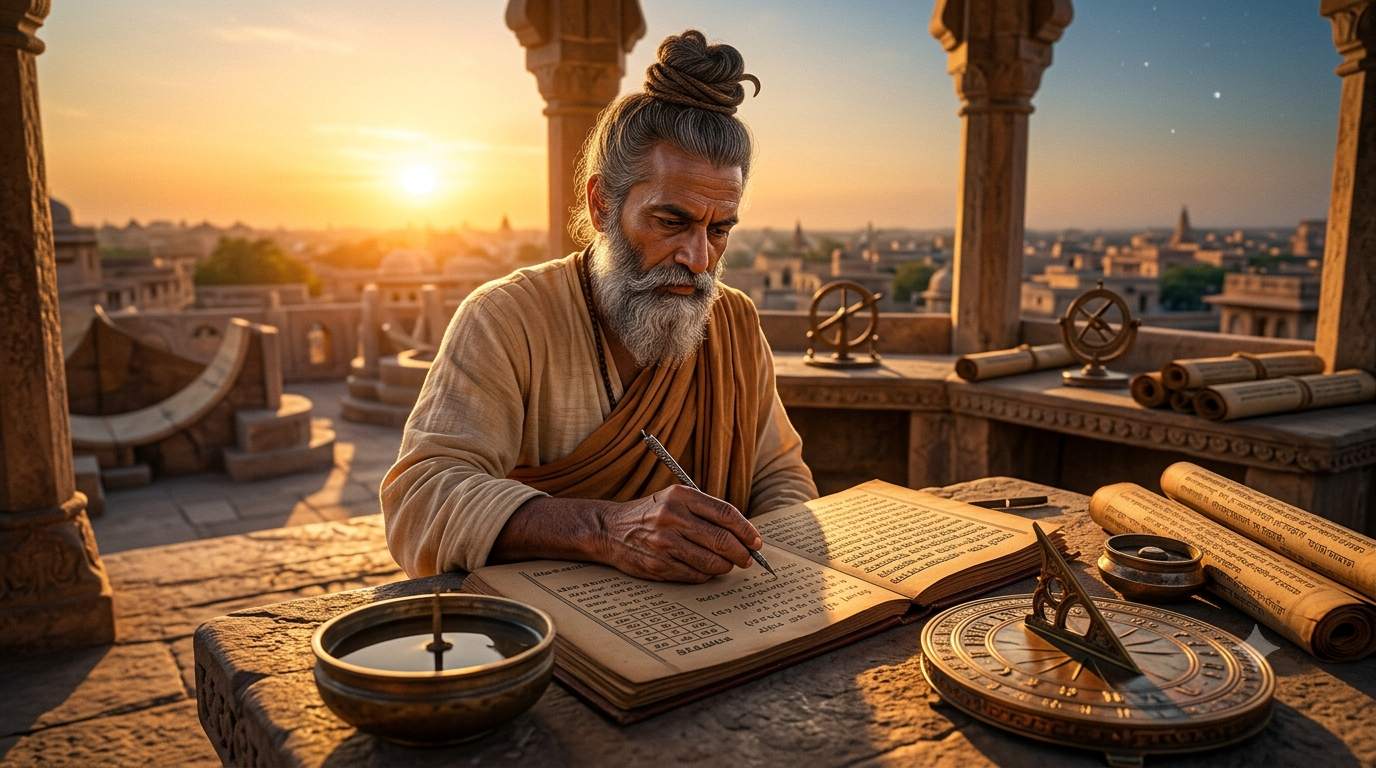
Acharya Charaka occupies a central place in the history of classical Indian medicine. He is chiefly remembered through the Charaka Samhita, one of the major surviving Sanskrit medical compendia of Ayurveda. The work is especially associated with kayachikitsa, broadly understood as internal medicine, and presents an extensive framework for understanding health, disease, diagnosis, treatment, diet, lifestyle, medicines and the responsibilities of a physician.
Calling Charaka simply the “father of medicine” can be useful as a popular shorthand, but it is historically imprecise. Modern medicine is the result of many later traditions, experiments and scientific developments. A more accurate description is that Charaka was a major historical contributor to the development and transmission of classical Indian medical thought. The text associated with him is particularly important because it preserves a large, systematic body of medical reasoning.
Who Was Acharya Charaka?
Very little secure biographical information about Charaka survives compared with the amount of medical material attributed to him. His exact birthplace, birth date and death date are uncertain, and later traditions sometimes present different accounts. What can be stated with greater confidence is that a physician named Charaka became associated with a redaction of an older medical tradition attributed to Agnivesha, itself linked in the classical lineage to teacher Punarvasu Atreya.
The present Charaka Samhita is a composite textual tradition rather than a modern single-author book. Scholarly discussions identify earlier material, Charaka's redaction and later work associated with Dridhabala. This layered history is important: it shows that ancient medical knowledge was transmitted, edited, reorganized and supplemented over generations.
Quick Facts
Charaka Samhita: The Central Text
The Charaka Samhita is among the most important surviving works of classical Ayurveda. It is not merely a list of remedies. It combines ideas about the nature of the body, causes of illness, methods of examination, prognosis, diet, medicines, treatment and the conduct of physicians. Its breadth makes it a valuable source for historians studying how medicine was conceptualized in ancient South Asia.
The text is traditionally organized into eight Sthanas, or major divisions: Sutra Sthana, Nidana Sthana, Vimana Sthana, Sharira Sthana, Indriya Sthana, Chikitsa Sthana, Kalpa Sthana and Siddhi Sthana. Together they contain 120 chapters in the commonly transmitted arrangement.
Sutra Sthana
Sutra Sthana introduces broad principles of Ayurveda, including health, disease, diet, daily conduct, therapeutic substances and the logic of medical practice. It establishes concepts and rules that later sections use.
Nidana Sthana
Nidana Sthana focuses on the causes and identification of major diseases. The emphasis on recognizing characteristic signs and causes illustrates the importance placed on clinical reasoning within the classical framework.
Vimana Sthana
Vimana Sthana discusses methods of knowledge, diet, taste, measurement and principles relevant to the training and practice of a physician. It also contains important discussions of how medical knowledge should be assessed and communicated.
Sharira and Indriya Sthana
Sharira Sthana deals with the body, development and related concepts of anatomy and embryology within the Ayurvedic framework. Indriya Sthana addresses signs, prognosis and observations associated with the senses and the progression of illness.
Chikitsa, Kalpa and Siddhi Sthana
Chikitsa Sthana is primarily concerned with therapeutic management. Kalpa Sthana discusses pharmaceutical preparations and procedures, while Siddhi Sthana addresses therapeutic procedures and their successful application. These sections demonstrate how the text moves from theory and diagnosis toward treatment.
Charaka's Approach to Health and Disease
One of the most distinctive features of the Charaka tradition is that health is not treated as merely the absence of a single named disease. Classical Ayurveda describes health through a balance among bodily processes, tissues, elimination, digestion, mental state and other factors. The famous tridosha framework—vata, pitta and kapha—forms one part of this theoretical system.
It is important to describe these concepts historically rather than automatically translating them into modern physiology. Vata, pitta and kapha are categories within Ayurvedic theory; they are not equivalent to modern anatomical organs, hormones or biochemical pathways. Modern biomedical science uses different definitions, measurement systems and evidence standards.
Diagnosis and Clinical Reasoning
The Charaka Samhita places substantial emphasis on observing the patient, understanding causes and distinguishing different manifestations of disease. The physician is expected to collect information rather than rely on a single sign. Discussions of patient examination, disease classification, prognosis and therapeutic suitability show an attempt to make medical practice systematic within the conceptual framework of Ayurveda.
The text also recognizes that patients differ. Factors such as age, strength, constitution, season, diet and environment are considered relevant to medical decisions. This individualized orientation is one reason the Charaka Samhita is frequently studied in discussions of classical medical methodology.
Prevention, Diet and Lifestyle
Charaka's medical tradition gives substantial attention to prevention. Diet, digestion, sleep, daily routines, seasonal changes and personal conduct are discussed as parts of maintaining health. This is one reason the Charaka Samhita is better understood as a broad medical and health compendium rather than a narrow disease manual.
Some dietary and lifestyle recommendations can be understood historically as part of the Ayurvedic system. They should not, however, be treated as automatically equivalent to modern clinical nutrition. Modern medical recommendations depend on contemporary evidence and may differ substantially from ancient prescriptions.
Medicines and Therapeutics
The Charaka Samhita contains extensive discussion of medicinal substances, preparations and therapeutic procedures. It classifies substances according to properties recognized by Ayurveda and gives detailed instructions concerning their use. The text also discusses purification and preparation of medicines in its pharmaceutical sections.
Historical study of these passages is valuable because it shows how physicians organized knowledge about medicinal substances. At the same time, historical descriptions should not be treated as modern medical prescriptions. The safety, dosage, contamination, interactions and effectiveness of a substance require modern scientific evaluation before any contemporary medical use.
Physician Training and Medical Ethics
One of the most striking aspects of the Charaka tradition is its attention to the physician as a trained professional. The text discusses qualities expected from a physician, the importance of learning, disciplined practice, communication and responsible conduct.
Medical knowledge is presented as something that should be transmitted through teachers, study and practical understanding. The relationship between physician and patient is also treated as ethically significant. These passages are important to historians because they demonstrate that professional conduct was considered part of medicine rather than an unrelated moral issue.
Charaka and the Idea of Immunity
A modern popular claim says that Charaka “discovered immunity.” This should be qualified. The Charaka Samhita contains discussions of resistance, susceptibility, vitality and the body's ability to withstand disease. Some modern writers interpret these ideas as early reflections related to immunity.
However, modern immunology is a scientific field based on cellular, molecular and physiological mechanisms that were established through much later research. The ancient Ayurvedic concepts should therefore be studied as historical medical ideas rather than treated as an exact description of the modern immune system.
Anatomy and Embryology
Charaka Samhita includes discussions of the body, fetal development and the formation of bodily structures. These passages provide evidence of sustained interest in anatomy and embryology within the Ayurvedic tradition. They also show how ancient Indian medical authors connected physical development with broader theories of life and constitution.
These descriptions are historically significant, but they should not be presented as equivalent to modern embryology. Modern developmental biology is based on microscopy, genetics, cellular biology and other evidence unavailable to ancient physicians.
Historical Timeline
The Charaka Samhita preserves an older medical lineage associated with Punarvasu Atreya and Agnivesha.
Charaka is associated with the redaction and development of the medical compendium.
Parts of the transmitted text are associated with Dridhabala, illustrating continued textual preservation and revision.
The Charaka Samhita becomes one of the foundational works of the classical Ayurvedic canon and is studied with commentaries.
Myths, Popular Claims & Historical Evidence
| Claim | Historical assessment |
|---|---|
| Charaka was the father of modern medicine. | Too broad and anachronistic. He is a major figure in classical Indian medicine and Ayurveda. |
| Charaka wrote the entire text alone. | Not supported. The Charaka Samhita is a layered textual tradition involving earlier material and later revision. |
| Charaka discovered modern immunity. | Not established. Ancient discussions of resistance should not be equated with modern immunology. |
| The Charaka Samhita is an important classical medical text. | Strongly supported by the surviving text and its long history in Ayurvedic scholarship. |
| Charaka's tradition emphasized physician training and conduct. | Supported by the text's extensive discussions of medical learning, practice and professional behavior. |
Charaka in the History of Indian Medicine
The Charaka Samhita and Sushruta Samhita are often discussed together because they represent major branches of classical Ayurveda. Charaka's text is especially associated with internal medicine, while the Sushruta tradition is strongly associated with surgery. Together with later works such as Vagbhata's compendia, they form a central part of the classical Ayurvedic literary tradition.
Charaka's importance therefore extends beyond a single physician. The text attributed to him preserves a large intellectual conversation involving teachers, physicians, theories and generations of textual transmission. Studying Charaka means studying this broader medical tradition.
Modern Relevance and Limitations
Today, Charaka is relevant to historians of medicine, Sanskrit studies, Ayurveda scholarship and the history of scientific knowledge. His work demonstrates that systematic medical literature existed in South Asia long before modern biomedical institutions emerged.
At the same time, historical respect does not require treating every ancient medical proposition as scientifically validated. Modern clinical medicine relies on controlled research, microbiology, pharmacology, physiology, epidemiology and other disciplines. Classical Ayurveda and modern biomedicine are different knowledge systems and should be compared carefully rather than collapsed into one another.
Conclusion
Acharya Charaka remains one of the most important names in the history of Indian medicine. Through the Charaka Samhita, a large and layered medical tradition has survived that addresses disease, diagnosis, treatment, diet, prevention, medicinal substances, professional training and physician ethics.
The strongest way to appreciate Charaka is through the actual historical record. His legacy does not depend on calling him the inventor of modern medicine or assigning modern biomedical discoveries to him. The Charaka Samhita itself is a remarkable historical document showing the depth, organization and continuity of medical scholarship in ancient South Asia.
परिचय
आचार्य चरक भारतीय चिकित्सा इतिहास के सबसे महत्वपूर्ण नामों में से एक हैं। वे मुख्य रूप से चरक संहिता से जुड़े हुए हैं, जो आयुर्वेद के प्रमुख संस्कृत चिकित्सा ग्रंथों में से एक है। इसमें आंतरिक चिकित्सा, रोगों के कारण, निदान, उपचार, आहार, जीवनशैली, औषधियों और चिकित्सक के आचरण पर व्यापक चर्चा मिलती है।
चरक को लोकप्रिय रूप से “Father of Medicine” कहा जाता है, लेकिन आधुनिक चिकित्सा के संदर्भ में यह नाम ऐतिहासिक रूप से बहुत व्यापक है। अधिक सटीक रूप से उन्हें शास्त्रीय भारतीय चिकित्सा और आयुर्वेद की परंपरा के एक प्रमुख विद्वान के रूप में समझना चाहिए।
आचार्य चरक कौन थे?
चरक के जीवन के बारे में निश्चित ऐतिहासिक जानकारी सीमित है। उनके जन्म और मृत्यु की सटीक तिथियां तथा जन्मस्थान निश्चित रूप से ज्ञात नहीं हैं। चरक एक पुराने चिकित्सा ज्ञान-परंपरा से जुड़े थे जिसे अग्निवेश से संबंधित माना जाता है, और अग्निवेश की परंपरा आत्रेय पुनर्वसु से जोड़ी जाती है।
आज उपलब्ध चरक संहिता को आधुनिक अर्थ में एक व्यक्ति की अकेली पुस्तक नहीं माना जाना चाहिए। यह कई चरणों से बनी एक textual tradition है। चरक को पुराने ज्ञान के पुनर्संपादन से जोड़ा जाता है और बाद में दृढ़बल द्वारा कुछ भागों के संरक्षण या पुनर्संयोजन की परंपरा मिलती है।
चरक संहिता
चरक संहिता आयुर्वेद का एक व्यापक चिकित्सा ग्रंथ है। इसमें केवल औषधियों की सूची नहीं है, बल्कि शरीर, रोग, निदान, रोग के कारण, उपचार, आहार, चिकित्सा-पद्धति और चिकित्सक के प्रशिक्षण जैसे विषय शामिल हैं।
इसे सामान्यतः आठ स्थानों में विभाजित किया जाता है: सूत्रस्थान, निदानस्थान, विमानस्थान, शरीरस्थान, इन्द्रियस्थान, चिकित्सास्थान, कल्पस्थान और सिद्धिस्थान। परंपरागत व्यवस्था में कुल 120 अध्याय बताए जाते हैं।
सूत्रस्थान
सूत्रस्थान में आयुर्वेद के मूल सिद्धांत, स्वास्थ्य, आहार, दिनचर्या, औषधीय पदार्थ और चिकित्सा से संबंधित आधारभूत विषय मिलते हैं।
निदानस्थान
निदानस्थान में रोगों के कारण और पहचान से जुड़े विषयों की चर्चा है। रोग के लक्षण और कारणों को समझना चिकित्सकीय निर्णय का हिस्सा माना गया है।
विमानस्थान
विमानस्थान में ज्ञान की पद्धति, आहार, स्वाद, मापन और चिकित्सक के प्रशिक्षण से जुड़े विषय मिलते हैं।
शरीर और इन्द्रियस्थान
शरीरस्थान शरीर, विकास और भ्रूण से संबंधित अवधारणाओं पर चर्चा करता है। इन्द्रियस्थान रोग की स्थिति और prognosis से जुड़े संकेतों पर ध्यान देता है।
चिकित्सा, कल्प और सिद्धिस्थान
चिकित्सास्थान उपचार पर केंद्रित है। कल्पस्थान औषधियों की तैयारी और प्रक्रियाओं से जुड़ा है, जबकि सिद्धिस्थान उपचार-पद्धतियों के सफल प्रयोग से संबंधित विषयों पर चर्चा करता है।
स्वास्थ्य और रोग की अवधारणा
चरक की चिकित्सा परंपरा में स्वास्थ्य को केवल किसी एक रोग की अनुपस्थिति नहीं माना जाता। आयुर्वेद में शरीर की विभिन्न प्रक्रियाओं, धातुओं, पाचन, मानसिक स्थिति और अन्य कारकों के संतुलन पर जोर दिया जाता है। वात, पित्त और कफ की त्रिदोष अवधारणा इसी सैद्धांतिक ढांचे का हिस्सा है।
इन अवधारणाओं को आधुनिक physiology के organs, hormones या biochemical pathways के बराबर नहीं मानना चाहिए। ये आयुर्वेदिक सिद्धांतों के भीतर विकसित श्रेणियां हैं।
निदान और चिकित्सकीय विचार
चरक संहिता में रोगी का निरीक्षण, रोग के कारणों को समझना, रोग की पहचान और prognosis पर जोर मिलता है। रोगी की उम्र, शक्ति, प्रकृति, मौसम, आहार और वातावरण जैसे कारकों को भी चिकित्सा निर्णय में महत्व दिया जाता है।
रोकथाम, आहार और जीवनशैली
चरक परंपरा में preventive health का विचार महत्वपूर्ण है। आहार, पाचन, नींद, दिनचर्या, ऋतु और व्यक्तिगत आचरण को स्वास्थ्य से जोड़ा जाता है। हालांकि प्राचीन आहार संबंधी निर्देशों को सीधे आधुनिक clinical nutrition के बराबर नहीं माना जाना चाहिए।
औषधियां और उपचार
चरक संहिता में औषधीय पदार्थों, उनकी तैयारी और उपचार में उनके उपयोग पर विस्तृत सामग्री है। इतिहास के लिए यह महत्वपूर्ण है क्योंकि इससे पता चलता है कि प्राचीन चिकित्सक औषधीय ज्ञान को व्यवस्थित करने का प्रयास करते थे। लेकिन किसी प्राचीन औषधि-विवरण को आधुनिक prescription नहीं समझना चाहिए; आधुनिक सुरक्षा और effectiveness की जांच अलग वैज्ञानिक प्रक्रिया है।
चिकित्सक प्रशिक्षण और नैतिकता
चरक परंपरा की महत्वपूर्ण विशेषता चिकित्सक के प्रशिक्षण और आचरण पर ध्यान है। अध्ययन, अनुशासन, ज्ञान, रोगी के साथ व्यवहार और जिम्मेदार चिकित्सा को महत्वपूर्ण माना गया है। यह चिकित्सा इतिहास में इसलिए महत्वपूर्ण है क्योंकि professional conduct को चिकित्सा का हिस्सा माना गया था।
क्या चरक ने Immunity खोजी थी?
आधुनिक लोकप्रिय लेखों में कहा जाता है कि चरक ने immunity की खोज की थी। यह दावा सावधानी से समझना चाहिए। चरक संहिता में रोग-प्रतिरोध, शरीर की क्षमता और रोग के प्रति संवेदनशीलता जैसे विषयों की चर्चा मिलती है। इन्हें कुछ आधुनिक लेखक immunity से जोड़ते हैं।
लेकिन modern immunology कोशिकाओं, molecules और physiological mechanisms पर आधारित आधुनिक विज्ञान है। इसलिए प्राचीन अवधारणाओं को आधुनिक immune system का exact description कहना सही नहीं होगा।
शरीर और भ्रूण-विकास
चरक संहिता में शरीर, भ्रूण-विकास और शारीरिक संरचनाओं से संबंधित चर्चा भी है। यह प्राचीन भारतीय चिकित्सा में anatomy और embryology में रुचि का प्रमाण है। लेकिन आधुनिक embryology genetics, cell biology, microscopy और अन्य आधुनिक प्रमाणों पर आधारित है, इसलिए दोनों को सीधे समान नहीं माना जाना चाहिए।
मिथक और ऐतिहासिक प्रमाण
दावा: चरक modern medicine के father थे। स्थिति: बहुत व्यापक और anachronistic दावा। वे classical Indian medicine के प्रमुख व्यक्ति थे।
दावा: चरक ने पूरी चरक संहिता अकेले लिखी। स्थिति: सही नहीं। ग्रंथ में पुराने और बाद के कई textual layers हैं।
दावा: चरक ने modern immunity खोजी। स्थिति: सिद्ध नहीं। रोग-प्रतिरोध की प्राचीन चर्चा को modern immunology के बराबर नहीं माना जा सकता।
दावा: चरक संहिता classical Ayurveda का महत्वपूर्ण medical text है। स्थिति: मजबूत ऐतिहासिक आधार वाला कथन।
भारतीय चिकित्सा इतिहास में चरक
चरक संहिता और सुश्रुत संहिता को अक्सर साथ में पढ़ा जाता है। चरक की परंपरा मुख्यतः internal medicine से जुड़ी है, जबकि सुश्रुत की परंपरा surgery से विशेष रूप से जुड़ी है। बाद में वाग्भट के ग्रंथों के साथ ये classical Ayurveda के प्रमुख साहित्यिक आधार बनते हैं।
आज की प्रासंगिकता और सीमाएं
आज चरक इतिहास-ए-चिकित्सा, संस्कृत अध्ययन, आयुर्वेद scholarship और South Asian scientific history के लिए महत्वपूर्ण हैं। उनका ग्रंथ दिखाता है कि प्राचीन दक्षिण एशिया में medical knowledge को बड़े और व्यवस्थित ग्रंथों में संरक्षित किया गया था।
लेकिन ऐतिहासिक महत्व और modern scientific validation अलग बातें हैं। आधुनिक चिकित्सा controlled research, physiology, pharmacology, microbiology और epidemiology जैसी आधुनिक disciplines पर आधारित है। इसलिए चरक की परंपरा और modern biomedicine की तुलना सावधानी से करनी चाहिए।
निष्कर्ष
आचार्य चरक भारतीय चिकित्सा इतिहास के एक महान नाम हैं। चरक संहिता के माध्यम से रोग, निदान, उपचार, आहार, रोकथाम, औषधियों, चिकित्सक-प्रशिक्षण और चिकित्सा-नैतिकता की एक विशाल परंपरा हमारे सामने आती है।
चरक की वास्तविक विरासत को समझने के लिए उन्हें आधुनिक medicine का inventor घोषित करने की जरूरत नहीं है। उनका ग्रंथ स्वयं इस बात का मजबूत ऐतिहासिक प्रमाण है कि प्राचीन दक्षिण एशिया में चिकित्सा संबंधी ज्ञान को व्यवस्थित रूप से विकसित, संकलित और पीढ़ियों तक प्रसारित किया गया।
Introduction
Acharya Charaka Indian medical history ke sabse important names mein se ek hain. Woh mainly Charaka Samhita se associated hain, jo classical Ayurveda ke major Sanskrit medical texts mein se ek hai. Isme internal medicine, disease causes, diagnosis, treatment, diet, lifestyle, medicines aur physician conduct par detailed discussion milti hai.
Charaka ko popular sources mein “Father of Medicine” kaha jata hai, lekin modern medicine ke context mein ye label historically too broad hai. Better description ye hai ki Charaka classical Indian medicine aur Ayurveda ke ek major historical contributor the.
Charaka Kaun The?
Charaka ke exact birth aur death dates aur birthplace certain nahi hain. Unka naam ek older medical tradition ke redaction se associated hai jo Agnivesha aur Atreya Punarvasu ki lineage se connected hai.
Aaj ki Charaka Samhita ko ek modern single-author book nahi samajhna chahiye. Ye ek layered textual tradition hai jisme older material, Charaka ki redaction aur later work associated with Dridhabala shamil hai.
Charaka Samhita
Charaka Samhita ek broad medical compendium hai. Isme sirf medicines nahi, balki body, disease, diagnosis, causes, treatment, diet, physician training aur professional conduct jaise subjects cover hote hain. Traditionally ise eight Sthanas mein organize kiya jata hai: Sutra, Nidana, Vimana, Sharira, Indriya, Chikitsa, Kalpa aur Siddhi Sthana.
Health Aur Disease Ka Framework
Charaka tradition mein health ko sirf kisi ek disease ki absence nahi maana jata. Ayurveda ke theoretical framework mein body processes, tissues, digestion, mental state aur other factors ke balance par focus hota hai. Vata, pitta aur kapha ka tridosha model isi framework ka part hai.
In concepts ko modern hormones, organs ya biochemical pathways ke exact equivalent nahi maana jana chahiye. Ye Ayurvedic categories hain aur modern physiology ka framework different hai.
Diagnosis Aur Clinical Reasoning
Charaka Samhita patient observation, causes ko samajhne, disease identification aur prognosis par emphasis karti hai. Age, strength, constitution, season, diet aur environment jaise factors ko bhi decision-making mein important maana gaya hai.
Prevention, Diet Aur Lifestyle
Charaka tradition preventive health ko important maanta hai. Diet, digestion, sleep, daily routine, seasonal changes aur personal conduct ko health se connect kiya jata hai. Lekin ancient recommendations ko automatically modern clinical nutrition ke equivalent nahi maana jana chahiye.
Medicines Aur Treatment
Charaka Samhita mein medicinal substances, preparations aur therapeutic procedures par detailed material hai. Historical perspective se ye important hai kyunki ye show karta hai ki ancient physicians medicinal knowledge ko systematic form mein organize karte the. Lekin kisi ancient remedy ko modern medical prescription nahi samajhna chahiye; safety aur effectiveness ko modern scientific evaluation ki zarurat hoti hai.
Physician Training Aur Ethics
Charaka tradition physician ke training aur conduct par strong emphasis deti hai. Learning, discipline, knowledge, communication aur responsible practice ko medicine ka important part maana gaya hai. Ye medical history mein significant hai kyunki professional ethics ko clinical knowledge se alag nahi kiya gaya.
Kya Charaka Ne Immunity Discover Ki?
Popular articles mein claim milta hai ki Charaka ne immunity discover ki. Charaka Samhita mein disease resistance, susceptibility aur bodily strength se related ideas milte hain, jinhe kuch modern writers immunity se compare karte hain.
Lekin modern immunology cells, molecules aur physiological mechanisms par based hai. Isliye ancient concepts ko modern immune system ka exact scientific description kehna historically accurate nahi hoga.
Anatomy Aur Embryology
Charaka Samhita body aur fetal development se related discussions bhi contain karti hai. Ye ancient Indian medical tradition mein anatomy aur embryology ke interest ko show karta hai. Lekin modern embryology genetics, cell biology aur microscopy jaise later scientific developments par based hai.
Myths vs Historical Evidence
Claim: Charaka modern medicine ke father the. Assessment: Too broad; woh classical Indian medicine ke major historical figure the.
Claim: Charaka ne entire Charaka Samhita alone write ki. Assessment: Supported nahi hai; text layered tradition hai.
Claim: Charaka ne modern immunity discover ki. Assessment: Not established; ancient disease-resistance ideas modern immunology ke same nahi hain.
Claim: Charaka Samhita classical Ayurveda ka foundational text hai. Assessment: Strong historical basis.
Indian Medical History Mein Charaka
Charaka Samhita aur Sushruta Samhita ko often together study kiya jata hai. Charaka ki tradition mainly internal medicine se associated hai, jabki Sushruta tradition surgery ke liye especially famous hai. Later Vagbhata ke works ke saath ye classical Ayurveda literature ke major pillars ban gaye.
Modern Relevance
Aaj Charaka history of medicine, Sanskrit studies, Ayurveda scholarship aur South Asian scientific history ke liye important hain. Unka work demonstrate karta hai ki ancient South Asia mein medical knowledge ko large systematic texts mein preserve aur develop kiya gaya.
Historical importance ko modern scientific validation ke saath mix nahi karna chahiye. Modern medicine controlled research, physiology, pharmacology, microbiology aur epidemiology jaise modern disciplines par based hai.
Conclusion
Acharya Charaka Indian medical history ke major scholars mein se ek hain. Charaka Samhita ke through disease, diagnosis, treatment, diet, prevention, medicines, physician training aur ethics ki ek extensive tradition preserved hai.
Charaka ki importance ko samajhne ke liye unhe modern medicine ka inventor declare karna zaroori nahi hai. Unka actual textual legacy hi ancient South Asian medical scholarship ki depth aur continuity ko demonstrate karta hai.
Research Authority & Historical Evidence
About this article
This article has been prepared for educational and historical research purposes using primary sources, scholarly references, and reputable historical or academic resources where available. Historical claims are presented with appropriate context, and claims that remain debated are identified as such.
इस लेख के बारे में
यह लेख शैक्षिक और ऐतिहासिक शोध के लिए तैयार किया गया है और जहाँ उपलब्ध हो वहाँ प्राथमिक स्रोतों, विद्वतापूर्ण संदर्भों तथा प्रतिष्ठित ऐतिहासिक या अकादमिक संसाधनों पर आधारित है। ऐतिहासिक दावों को संदर्भ सहित प्रस्तुत किया गया है और जिन दावों पर मतभेद हैं उन्हें उसी रूप में चिह्नित किया गया है।
Article information
Author: Hindu Research Portal Editorial Team
Published: Not specified
Last updated: 11 August 2026
Category: Indian Medicine & Ayurveda
लेख की जानकारी
लेखक: Hindu Research Portal Editorial Team
प्रकाशित: निर्दिष्ट नहीं
अंतिम अद्यतन: 11 अगस्त 2026
श्रेणी: भारतीय चिकित्सा और आयुर्वेद
Evidence Status
Core textual history: 🟢 Well established. Chronology and transmission: 🟡 Debated / historically plausible. Popular claims that make Charaka the founder of modern biomedical medicine or the discoverer of modern immunology are not established.
प्रमाण की स्थिति
मुख्य पाठ-परंपरा: 🟢 अच्छी तरह स्थापित। कालक्रम और पाठ-प्रेषण: 🟡 विवादित / ऐतिहासिक रूप से संभाव्य। Charaka को आधुनिक biomedical medicine का संस्थापक या modern immunology का खोजकर्ता बताने वाले लोकप्रिय दावे स्थापित नहीं हैं।
Claim → Evidence → Interpretation → Caveat
CLAIM: Charaka is associated with the Charaka Samhita and its internal-medicine tradition.
EVIDENCE: The surviving Charaka Samhita is a layered medical compendium, and a 2021 critical edition of Nidana Sthana is catalogued by the U.S. National Library of Medicine.
INTERPRETATION: Charaka is best understood as a major historical figure in a textual medical tradition, not as a modern biomedical founder.
CAVEAT: Historical concepts that resemble modern ideas should not be treated as equivalent to modern physiology, immunology, microbiology or pharmacology without independent scientific evidence.
दावा → प्रमाण → व्याख्या → सावधानी
दावा: Charaka का संबंध Charaka Samhita और उसके internal-medicine tradition से है।
प्रमाण: उपलब्ध Charaka Samhita एक layered medical compendium है; NLM में 2021 का Nidana Sthana critical edition catalogued है।
व्याख्या: Charaka को आधुनिक biomedical founder के बजाय एक महत्वपूर्ण ऐतिहासिक चिकित्सा-परंपरा के व्यक्तित्व के रूप में समझना अधिक उचित है।
सावधानी: आधुनिक विचारों से मिलती-जुलती ऐतिहासिक अवधारणाओं को आधुनिक physiology, immunology, microbiology या pharmacology के बराबर न माना जाए।
Myth vs Evidence
- “Charaka invented modern medicine.” Unsupported as a literal modern-medical claim; the page should retain the historical honorific only with context.
- “Charaka discovered immunity.” Not established. Historical discussions of resistance to disease are not the same as modern immunology.
- “Ancient theory = modern mechanism.” No: historical medical theory and modern biomedical mechanism are different evidence systems.
लोकप्रिय दावा बनाम प्रमाण
- “Charaka ने modern medicine invent की।” आधुनिक चिकित्सा के शाब्दिक दावे के रूप में प्रमाणित नहीं; honorific को संदर्भ सहित समझना चाहिए।
- “Charaka ने immunity खोजी।” स्थापित नहीं। रोग-प्रतिरोध पर ऐतिहासिक चर्चा modern immunology के समान नहीं है।
- “Ancient theory = modern mechanism.” नहीं; ऐतिहासिक चिकित्सा सिद्धांत और आधुनिक biomedical mechanism अलग evidence systems हैं।
Sources & Further Reading
Primary / Critical Texts
- National Library of Medicine catalogue — Charaka Samhita, Nidana Sthana: Critical Edition (ed. N. Srikanth, Central Council for Research in Ayurvedic Sciences, Ministry of AYUSH, Government of India, 2021).
- National Library of Medicine catalogue — The Caraka Samhita of Agnivesa, revised by Caraka and Drdhabala.
Scholarly / Academic Sources
- "A review through Charaka Uttara-Tantra," PubMed Central.
- "Medical geography in Charaka Samhita," PubMed Central.
- "A critical review of the philosophical concepts of Carakopaskara commentary," PubMed Central.
- "Charak Samhita Online Edition — a step towards globalization of Ayurveda," Journal of Ayurveda and Integrative Medicine / PubMed Central.
स्रोत और आगे पढ़ने के लिए
प्राथमिक / Critical Texts
- National Library of Medicine catalogue — Charaka Samhita, Nidana Sthana: Critical Edition (सं. N. Srikanth, Central Council for Research in Ayurvedic Sciences, Ministry of AYUSH, Government of India, 2021)।
- National Library of Medicine catalogue — The Caraka Samhita of Agnivesa, revised by Caraka and Drdhabala।
Scholarly / Academic Sources
- "A review through Charaka Uttara-Tantra," PubMed Central।
- "Medical geography in Charaka Samhita," PubMed Central।
- "A critical review of the philosophical concepts of Carakopaskara commentary," PubMed Central।
- "Charak Samhita Online Edition — a step towards globalization of Ayurveda," Journal of Ayurveda and Integrative Medicine / PubMed Central।
Medical / Educational Disclaimer
This page discusses historical medical traditions for educational purposes. It is not medical advice and should not be used to diagnose, treat, or prevent a health condition. For personal medical decisions, consult a qualified healthcare professional.
चिकित्सकीय / शैक्षिक अस्वीकरण
यह पृष्ठ ऐतिहासिक चिकित्सा परंपराओं की शैक्षिक चर्चा है। यह चिकित्सकीय सलाह नहीं है और इसका उपयोग किसी स्वास्थ्य स्थिति का निदान, उपचार या रोकथाम करने के लिए नहीं किया जाना चाहिए। व्यक्तिगत चिकित्सा निर्णयों के लिए योग्य healthcare professional से परामर्श करें।
Frequently Asked Questions
Who was Acharya Charaka?
Charaka was an ancient Indian physician associated with the redaction and transmission of the medical compendium known as the Charaka Samhita.
What is Charaka famous for?
He is chiefly associated with the Charaka Samhita and the classical Ayurveda tradition of internal medicine.
When did Charaka live?
His exact dates are uncertain; the present textual tradition contains material from multiple periods.
What is the Charaka Samhita?
It is a Sanskrit medical compendium associated with Charaka and based on an older Agnivesha tradition.
Did Charaka write the entire Charaka Samhita?
No simple single-author model is supported. The work has earlier material and later revision associated with Dridhabala.
What subjects are covered in the Charaka Samhita?
It covers medical theory, causes of disease, diagnosis, prognosis, diet, anatomy, treatment, medicines and physician conduct.
Is Charaka the father of modern medicine?
That label is anachronistic. He is more accurately described as a major figure in classical Indian medicine and Ayurveda.
Did Charaka discover immunity?
Ancient discussions of disease resistance exist, but they should not be treated as the modern scientific theory of immunity.
What are the eight sections of the Charaka Samhita?
Sutra, Nidana, Vimana, Sharira, Indriya, Chikitsa, Kalpa and Siddhi Sthana.
Why is Charaka important today?
He is important for the history of medicine, Ayurveda scholarship, medical ethics and the study of systematic medical literature in South Asia.